Email : juanmamu@unex.es
University of Extremadura,
Cáceres Spain
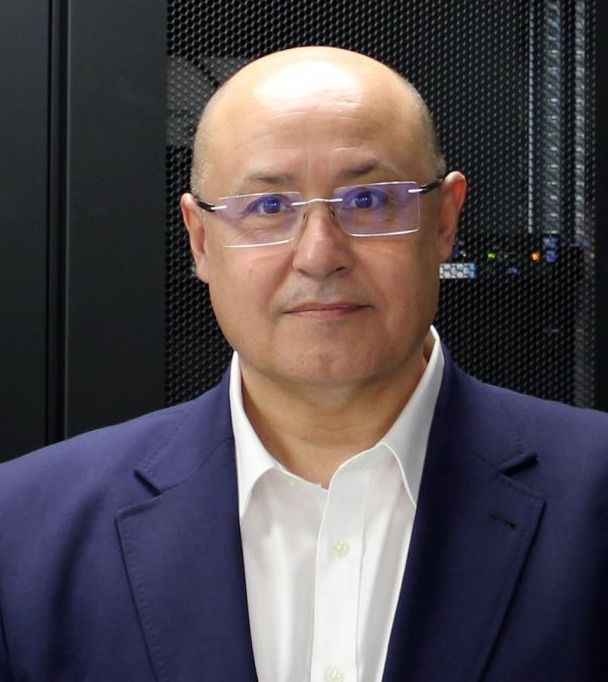
Juan Manuel Murillo is a Full Professor of Software Engineering at the University of Extremadura (Spain) and a founding member of the Quercus Software Engineering Group. He leads the Social and Pervasive Innovation Lab (SPILab), where his research focuses on service-oriented and distributed technologies for mobile systems.
Since 2012, his work has contributed to concepts such as the Internet of People and People as a Service, anticipating ideas later consolidated in fog and mist computing, with applications mainly in health and ageing. In recent years, he has become actively involved in the Quantum Software Engineering community, taking part in the organization of several international events and delivering keynote talks at different conferences. His current research interests focus on the disciplined development of quantum software, with particular emphasis on hybrid quantum–classical systems and programming abstractions that support their engineering.
Most current quantum programming languages are largely focused on building very low-level circuits using quantum gates that apply transformations and create entanglement between qubits. In this respect, today’s quantum programming resembles assembly programming in the 1960s, where developers worked directly with bits and registers through primitive operations such as carry or rotation. While this low-level approach is valuable for implementing highly efficient routines, it becomes a significant obstacle when developing programs that tackle complex problems in a structured and systematic way. To move beyond these limitations, quantum programming needs richer and more expressive abstractions that support the development and composition of quantum software. This talk discusses several promising directions for evolving such abstractions and making quantum programming more accessible and scalable.
